


Discovery and decision support · UX/UI pattern guide
Comparison cards
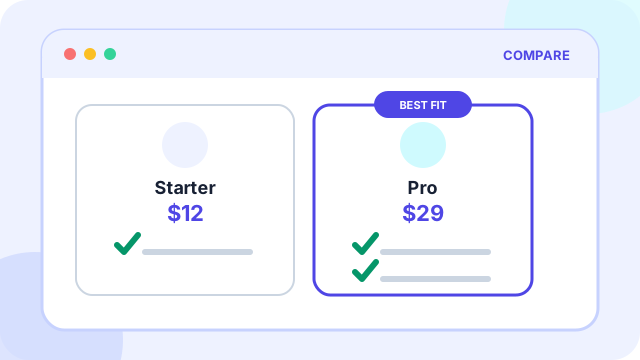
Comparison cards present repeated objects with consistent attributes so users can scan differences, identify tradeoffs, and take the next action.
At a glance
What the pattern is designed to accomplish
Scan-friendly cards with highlights, metadata, badges, and quick actions.
Planning price
€700
A starting budget anchor before discovery and technical scoping.
Typical effort
2-4 days
The implementation range depends on states, data, and integrations.
Pattern family
Discovery and decision support
Use the family to find adjacent patterns that support the same journey.
Use cases
When this pattern is a strong fit
Use the pattern when it removes a real decision or interaction burden, not simply because users recognize its visual form.
Best suited to
- Products, plans, candidates, destinations, or content options
- Decisions involving a small set of repeated attributes
- Responsive layouts where a full comparison table would be difficult to use
Anatomy
The essential parts of comparison cards
The visual treatment can change, but these responsibilities need to remain clear.
Part 1
A consistent title, image or identifier, and attribute order
Define this part explicitly in the design and test it with realistic content and states.
Part 2
Prominent differentiators rather than every available field
Define this part explicitly in the design and test it with realistic content and states.
Part 3
Status, recommendation, or trust badges with explicit meaning
Define this part explicitly in the design and test it with realistic content and states.
Part 4
Comparable actions placed in predictable locations
Define this part explicitly in the design and test it with realistic content and states.
Implementation
Design and delivery guidance
The pattern works when interaction rules, content, data, and edge cases support the same user goal.
Recommended approach
- Choose attributes from actual decision criteria.
- Align values and units so differences can be scanned without interpretation.
- Offer a dedicated side-by-side view for complex, high-consideration choices.
Common failure modes
- Changing field order or terminology between cards
- Using badges as unexplained persuasion rather than information
- Packing so much content into cards that comparison becomes slower
Accessibility
Inclusive design requirements
Accessibility is part of the pattern's behavior and content model, not a visual pass added after implementation.
Minimum considerations
- Use real headings and lists so card structure survives without the visual grid.
- Include text labels for icons, ratings, and color-coded differences.
- Keep action names specific, especially when several cards repeat the same controls.
History
How comparison cards emerged and who popularized it
Interface patterns usually evolve through several technologies and products. The distinction below avoids assigning a single inventor where the evidence points to gradual adoption.
Origins
How the pattern came about
Comparison layouts descend from printed catalogs, scorecards, and consumer buying guides. Early web stores translated these into tables, while card layouts emerged as responsive interfaces needed more flexible repeated objects.
Popular adoption
Who helped make it mainstream
Consumer Reports helped establish systematic attribute comparison in publishing. On the web, ecommerce marketplaces and responsive card systems such as Material Design made compact comparison cards familiar across shopping and subscription products.
History and practice sources
Related patterns
Continue through the pattern library
Adjacent patterns often need to be designed as one journey rather than as isolated components.
Discovery and decision support
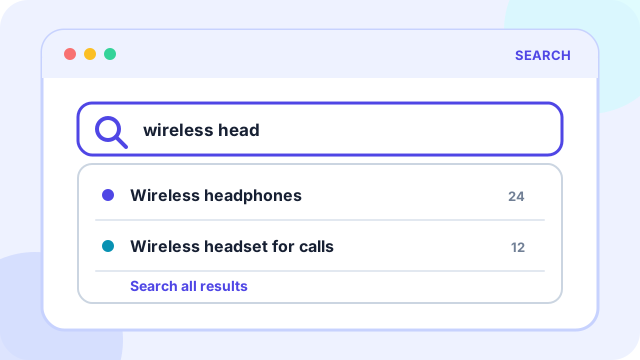
Smart search and suggestions
Discovery and decision support
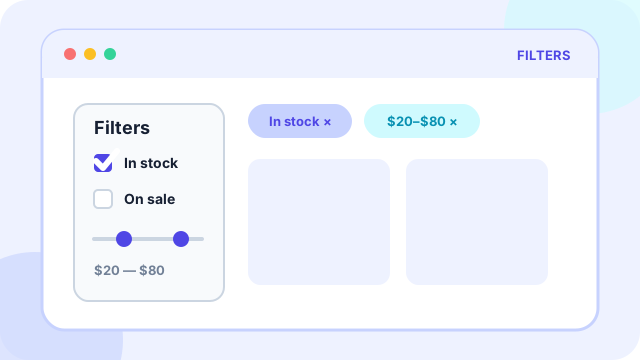
Filters, sorting, and chips
Discovery and decision support
Object card action bar
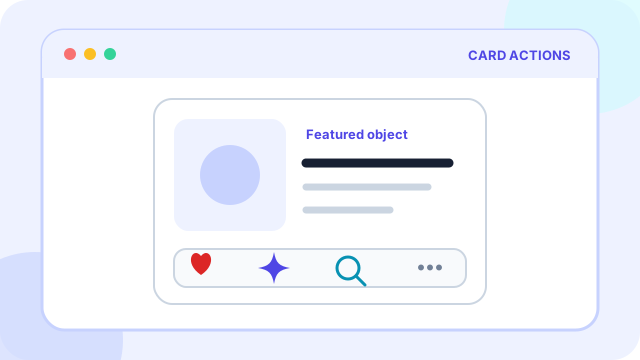
Reusable add-to-cart, ask-AI, wishlist, share, and details actions for product or content cards.
Read the pattern guide