


Trust, accessibility, and feedback · UX/UI pattern guide
Inline validation and recovery
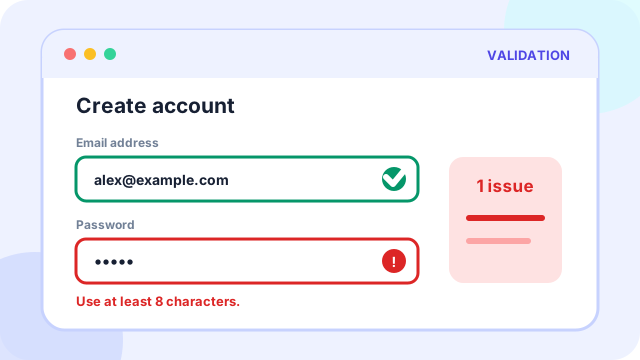
Inline validation checks input close to the relevant field, explains the problem in plain language, and helps users correct it without losing work.
At a glance
What the pattern is designed to accomplish
Field-level errors, helpful fixes, prevention states, and success confirmations.
Planning price
€850
A starting budget anchor before discovery and technical scoping.
Typical effort
3-5 days
The implementation range depends on states, data, and integrations.
Pattern family
Trust, accessibility, and feedback
Use the family to find adjacent patterns that support the same journey.
Use cases
When this pattern is a strong fit
Use the pattern when it removes a real decision or interaction burden, not simply because users recognize its visual form.
Best suited to
- Forms with strict formats, eligibility rules, or unique identifiers
- Checkout, registration, application, and configuration flows
- Inputs where errors can be detected before final submission
Anatomy
The essential parts of inline validation and recovery
The visual treatment can change, but these responsibilities need to remain clear.
Part 1
Preventive labels, examples, constraints, and input affordances
Define this part explicitly in the design and test it with realistic content and states.
Part 2
Validation at an appropriate moment, usually after field completion
Define this part explicitly in the design and test it with realistic content and states.
Part 3
A specific message next to the field plus an error summary when needed
Define this part explicitly in the design and test it with realistic content and states.
Part 4
Positive confirmation only where uncertainty is meaningful
Define this part explicitly in the design and test it with realistic content and states.
Implementation
Design and delivery guidance
The pattern works when interaction rules, content, data, and edge cases support the same user goal.
Recommended approach
- Explain how to fix the value, not merely that it is invalid.
- Avoid validating unfinished input while the user is still typing.
- Preserve every valid value after submission errors.
Common failure modes
- Showing errors before users have had a chance to complete the field
- Using red borders or generic Invalid messages without instructions
- Moving the layout so much that the field and message become hard to track
Accessibility
Inclusive design requirements
Accessibility is part of the pattern's behavior and content model, not a visual pass added after implementation.
Minimum considerations
- Associate help and errors with inputs programmatically.
- Move focus to an error summary on failed submission and link back to fields.
- Do not rely on color, icons, or live announcements alone.
History
How inline validation and recovery emerged and who popularized it
Interface patterns usually evolve through several technologies and products. The distinction below avoids assigning a single inventor where the evidence points to gradual adoption.
Origins
How the pattern came about
Form validation began as a server-side response after submission. JavaScript and Ajax made it practical to validate individual fields without reloading the page, shifting feedback closer to the moment of input.
Popular adoption
Who helped make it mainstream
Luke Wroblewski's form-design work and 2009 usability testing quantified the benefits of well-timed inline validation. Ecommerce, account creation, and public-service design systems then turned specific, field-level recovery into a standard expectation.
History and practice sources
Related patterns
Continue through the pattern library
Adjacent patterns often need to be designed as one journey rather than as isolated components.
Trust, accessibility, and feedback
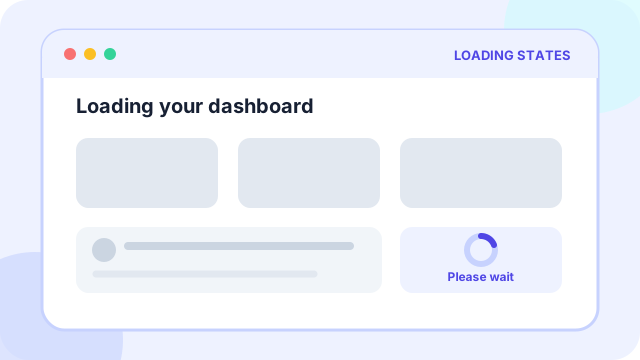
Loading, skeleton, and empty states
Trust, accessibility, and feedback
Accessibility pass
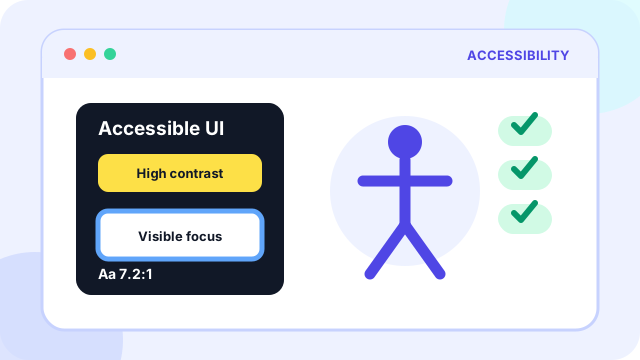
Keyboard paths, focus states, contrast, labels, semantic landmarks, and reduced motion.
Read the pattern guideTrust, accessibility, and feedback
Ask-AI object helper
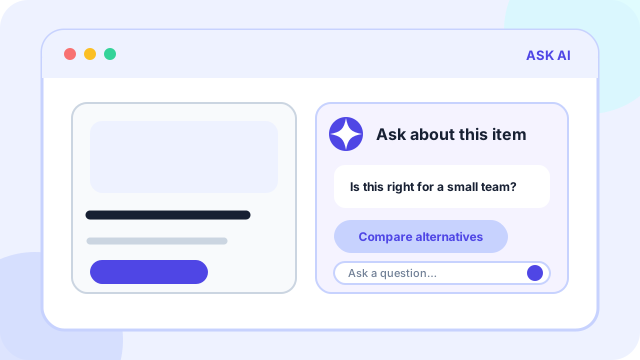
Per-object AI prompts that explain fit, answer questions, compare options, and escalate to contact.
Read the pattern guide