


July 2, 2026 · 12 min read · By Kris Haamer
Consensus Hong Kong 2025: The Conference Was a Citywide Interface
The official event was at HKCEC. The registered week spread across Hong Kong into workouts, AI-agent summits, tokenized bao, a crypto roast, and overlapping parties. The interesting product was the routing layer between them.
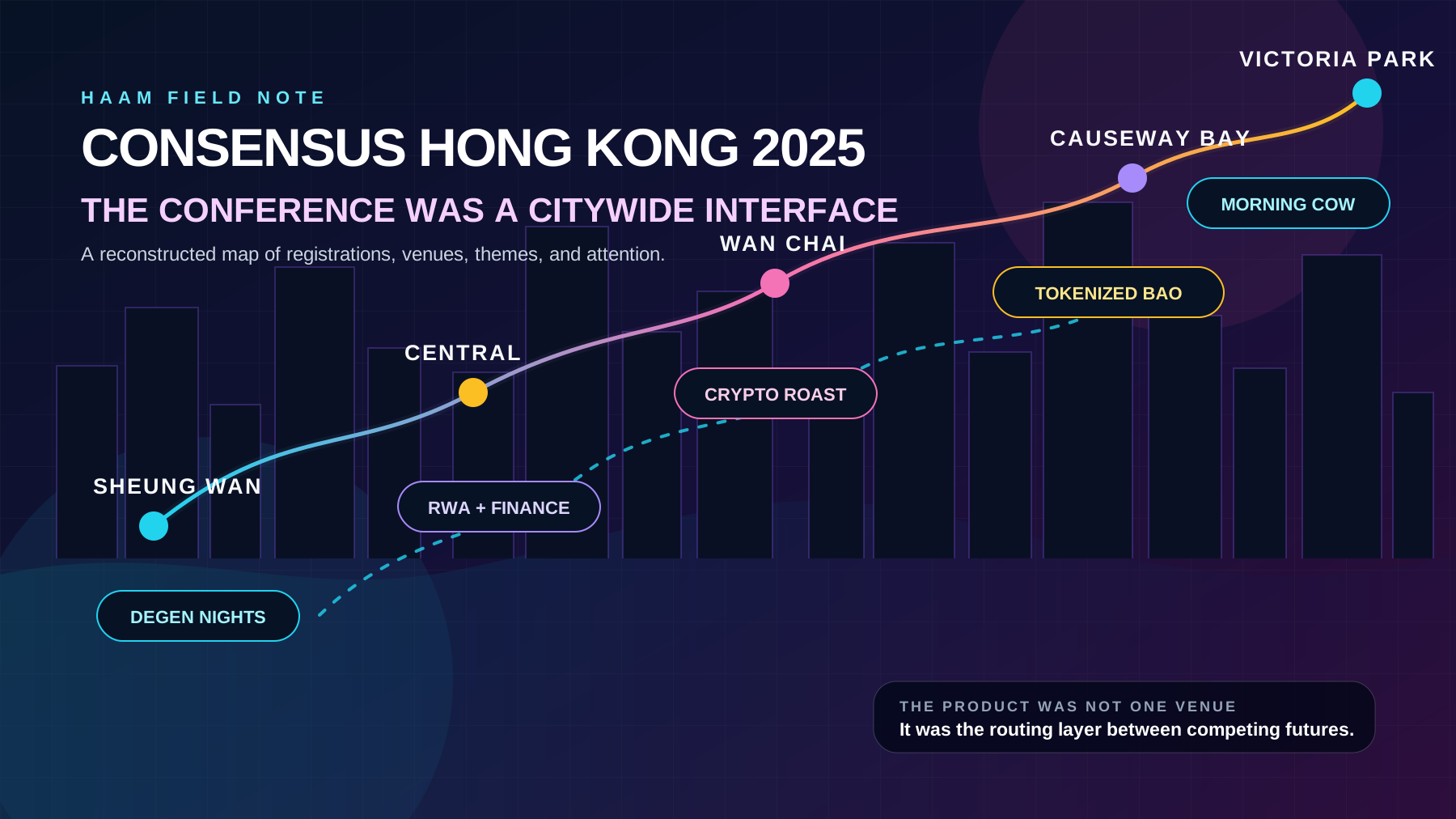
Reconstructed attendance trail
What the records support, and how strongly
Confirmed
Consensus Hong Kong pass
A ticket confirmation establishes access to the main event at HKCEC from February 18 to 20, 2025.
Strong trail
ElizaBao x DA AGE
The February 19 registration included a Wallet pass for the Causeway Bay event.
Strong trail
Crypto Roast Comedy Night
The February 19 registration included both in-person and livestream options in Wan Chai.
Possible
Crypto Outdoor Workout
The February 17 registration was geographically and temporally possible, but no check-in record remains.
One week, three modes
Morning
Workouts, runs, and breathwork
Networking had acquired an embodied counter-programme: movement, meditation, and recovery before the meeting calendar began.
Afternoon
AI agents, DePIN, RWA, and verifiable computing
The registration graph repeatedly combined autonomous software with blockchains, confidential computing, decentralized infrastructure, and real-world assets.
Evening
Comedy, memecoins, and themed nightlife
Roasts, discos, game formats, closing parties, and developer nights gave each ecosystem a distinct social identity after the panels ended.
The official venue was only the anchor
Consensus Hong Kong 2025 was officially centered at the Hong Kong Convention and Exhibition Centre in Wan Chai. The retained pass establishes the formal event, while the surrounding registrations reveal a week that had spread far beyond one building.
CoinDesk described hundreds of side events and exclusive parties. Wan Chai, Central, Causeway Bay, Sheung Wan, Cyberport, and the harbourfront became nodes in one distributed programme.
The main interaction problem was no longer only what to watch on stage. It was where to be, what to skip, how long the city would take to cross, and which version of the industry deserved the next two hours.
The RSVP graph was not an itinerary
The retained registrations overlap directly. It is physically impossible that every accepted event became an attended event. A calendar can look like autobiographical evidence while actually recording desire, optionality, and fear of missing out.
The most defensible reconstruction is a confidence map. A conference ticket is confirmed. A Wallet pass adds weight. A plausible sequence adds some confidence. An accepted invitation on its own proves interest, not presence.
Event platforms often collapse registered, approved, waitlisted, bookmarked, checked in, streamed, and attended into one visual state. The result is a polished but unreliable memory of what happened.
Morning had become a protocol
The Crypto Outdoor Workout listing scheduled an open fitness session in Victoria Park before the official conference began. Its programme mixed warmups, squats, pushups, chin-ups, dips, abdominal work, yoga, and stretches.
Other registrations around the week included runs and breathwork. This was a lower-pressure social interface: move beside someone first, exchange the pitch later.
The format acknowledged the body that conventional conferences ignore. Wellness became both genuine recovery and another branded surface for relationship building.
AI agents were already eating the crypto schedule
The registration graph repeatedly returned to AI agents: agent summits, decentralized AI, AI plus DePIN, verifiable computing, confidential infrastructure, and agent-oriented developer gatherings.
The combination made strategic sense. AI agents create questions about identity, permissions, payments, coordination, provenance, and trust. Blockchain projects were positioning their networks as infrastructure for software that might transact or act without a person approving every step.
The schedule did not prove that this stack already worked. It showed where attention was moving: away from a person clicking a wallet and toward software acting across networks on someone’s behalf.
Tokenized bao made real-world assets literal
ElizaBao x DA AGE invited guests to Meta Stages in Causeway Bay to have tokenized bao. The listing described a family food business with roots in the 1970s, expansion plans, and a BAO token connecting its physical operation to Web3.
Real-world asset discussions often become abstract: bonds, property, funds, settlement, custody, and compliance. A bao collapses the abstraction. It can be held, eaten, priced, photographed, gifted, and compared with the digital claim wrapped around it.
The product question becomes clear: what does the digital object let someone do? Tokenization becomes meaningful only when its relationship to the physical business is legible at the moment of use.
The ecosystem scheduled its own critique
Crypto Roast Comedy Night at Garage Society in Wan Chai promised a roasting session for crypto and Web3, led by comedian and host Mona Shaikh. The in-person listing was marked sold out, while a separate livestream option also existed.
A roast gives a community permission to name its clichés, inflated claims, status games, and recurring failures without turning every disagreement into a formal debate.
Industries that cannot joke about themselves become fragile. The comedy event was not only entertainment around the serious programme. It was part of how the ecosystem metabolized its own absurdity.
Every evening offered a different identity
The wider registration graph moved through institutional finance, stablecoins, decentralized science, memecoins, protocol launches, developer culture, women in Web3, artificial intelligence, consciousness, and nightlife.
A person could spend one evening in a polished financial setting, another inside a memecoin game, and another at a developer night staged like a fantasy bar. Venue, dress code, sponsor mix, and promised social reward segmented the same broad market into tribes.
Side events often reveal more than the main agenda. The official conference must hold the whole industry together. A side event can exaggerate one worldview until its assumptions become visible.
Hong Kong was the operating system
Dense districts, short transit links, elevated walkways, ferries, taxis, and the MTR allowed the programme to spread while still feeling like one event. Each neighbourhood acted like a tab in the interface.
Physical proximity can be deceptive. A venue that looks nearby may still require lifts, footbridges, station exits, queues, security, and a decision about whether the next room is worth abandoning the current conversation.
The event app could build a personal agenda and expose venue maps, but Hong Kong supplied the real routing, atmosphere, friction, and serendipity.
What I would design differently
A better conference interface would distinguish saved, registered, approved, waitlisted, checked in, streamed, left early, and attended. It would warn about impossible overlaps and include realistic door-to-door travel time.
It would also let people design an energy budget, not only a time budget. A panel, a sales meeting, a workout, a noisy party, and a deep conversation do not consume attention in the same way.
Most importantly, it would reduce fear of missing out rather than amplify it. A useful event product helps a person build a coherent week and remember it honestly afterward.
The side events had become the product
Consensus supplied the anchor, legitimacy, audience, timing, and shared API. Hundreds of organizers built experiences on top of it: infrastructure, culture, deal rooms, food, movement, comedy, and spectacle.
The strongest signal was the operating model: a large event creating enough concentrated attention for an entire temporary economy to assemble around it.
Consensus Hong Kong 2025 was a conference, but the larger product was the network of routes, invitations, identities, and competing futures that appeared across the city for one week.