


November 3, 2017 · 3 min read
AI Frontiers 2017 Field Note
A first-person field note from AI Frontiers 2017 in Santa Clara, before applied deep learning had fully settled into everyday product interfaces.
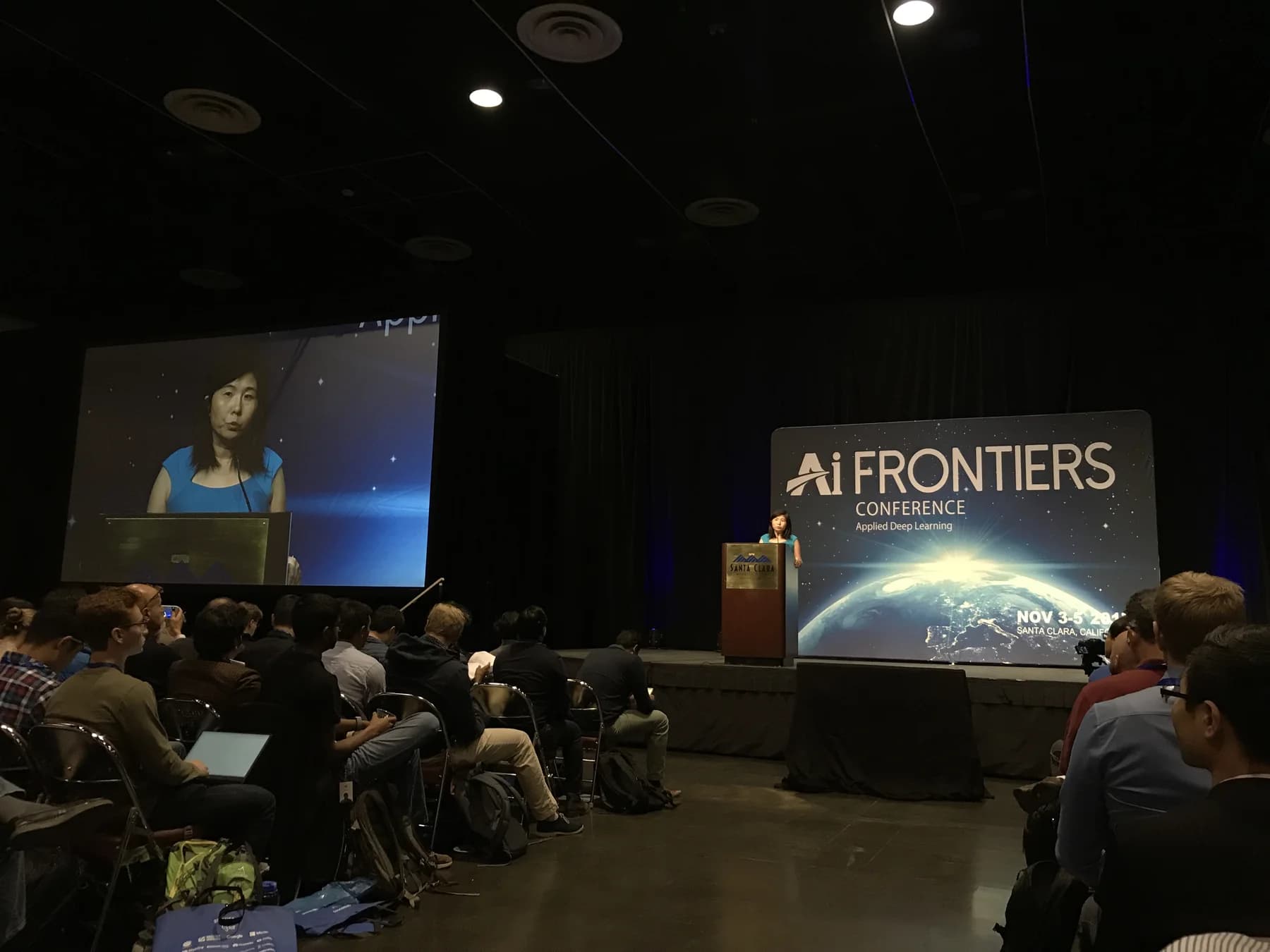
A practical frontier, not only a research one
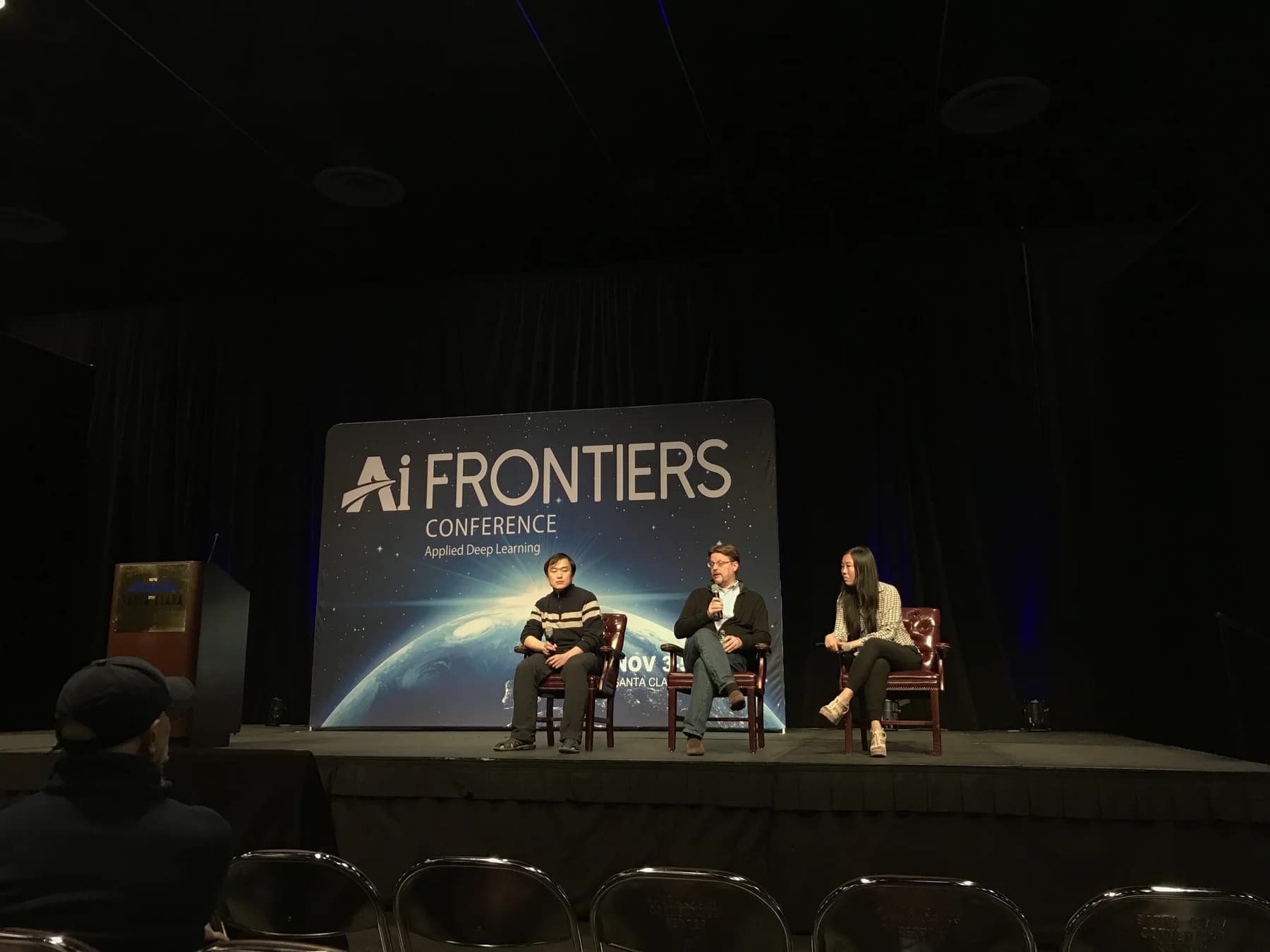
In November 2017, I was at AI Frontiers in Santa Clara with a camera roll full of stage slides, whiteboards, demos, and hallway signage. Looking back, the useful memory is not that AI felt new. It is that people were already trying to force it into product-shaped problems: latency, context, interfaces, trust, and operational cost.
The event branding talked about applied deep learning, and that distinction mattered. The interesting questions were less about whether models could recognize patterns and more about how those recognitions would become usable systems.
The promise was social, but the work was infrastructural
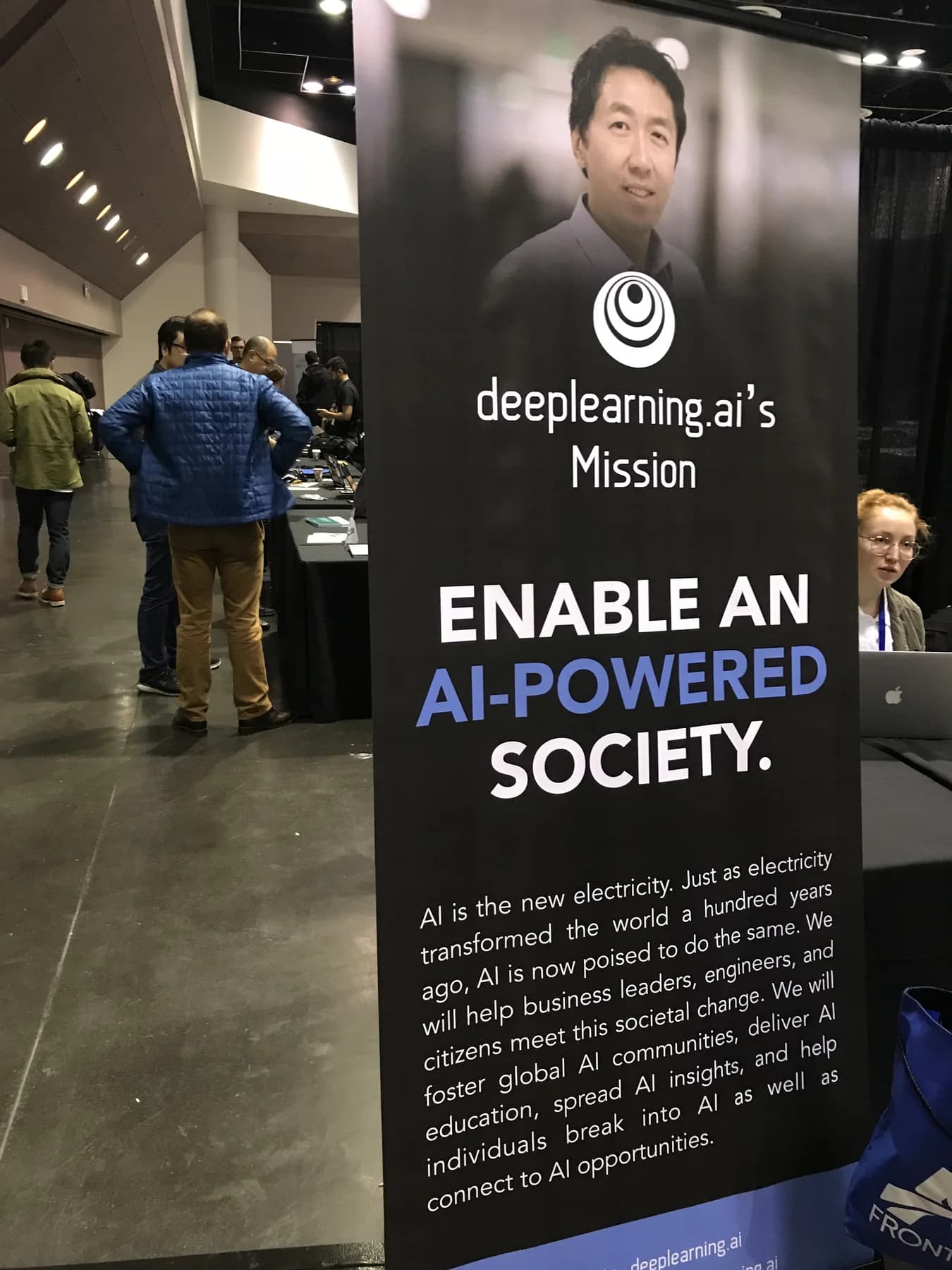
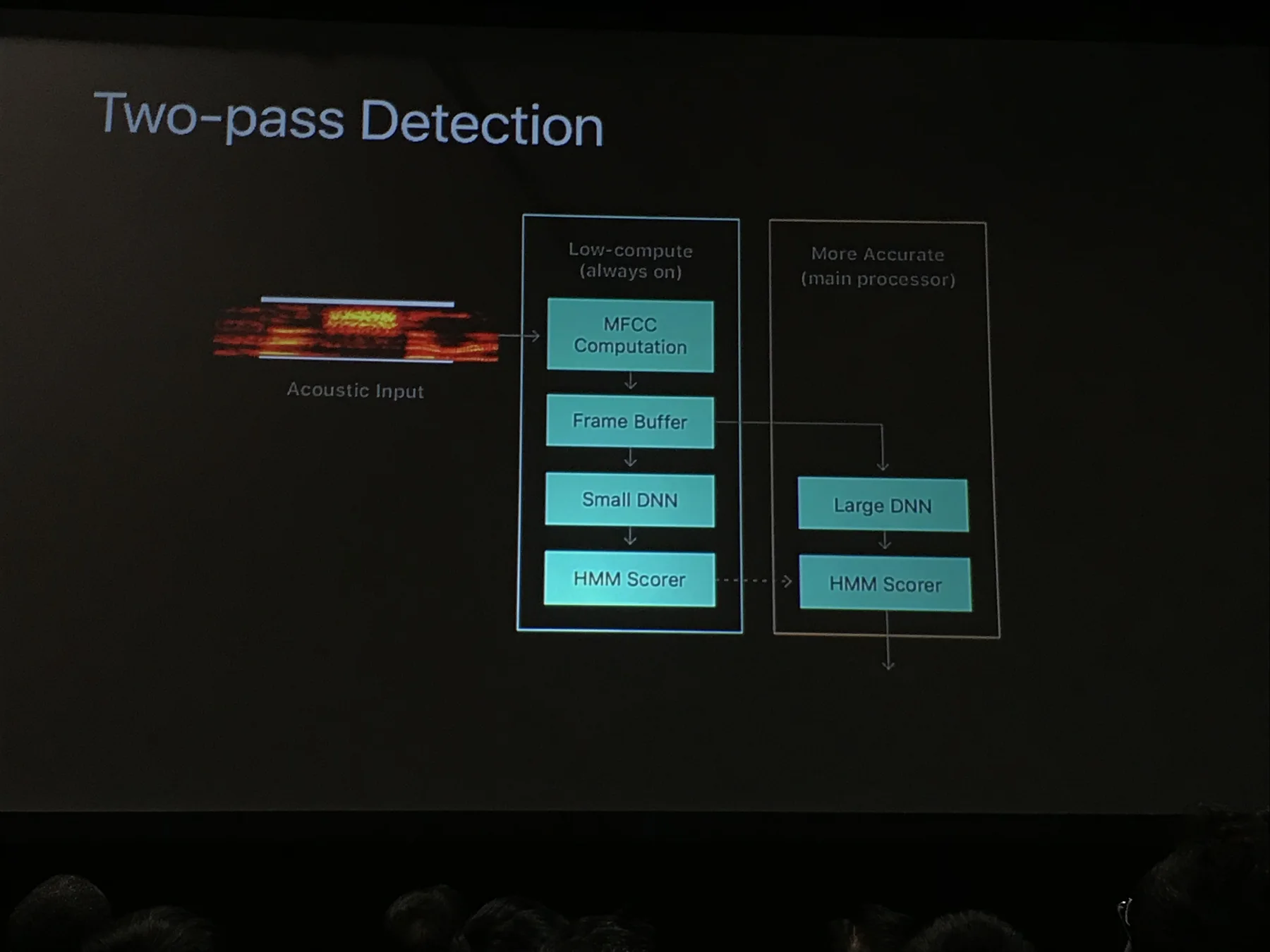
One hallway sign presented AI as a broad social transformation. Inside the talks, the conversation was much more concrete: smaller models, frame buffers, processors, detection passes, and the messy engineering needed to make intelligence feel available at the right moment.
That contrast is still useful. Big AI promises depend on invisible product infrastructure. A claim about an AI-powered society only becomes real when the system is fast enough, legible enough, and reliable enough for people to use without thinking about the stack underneath.
Interfaces were already the unresolved layer
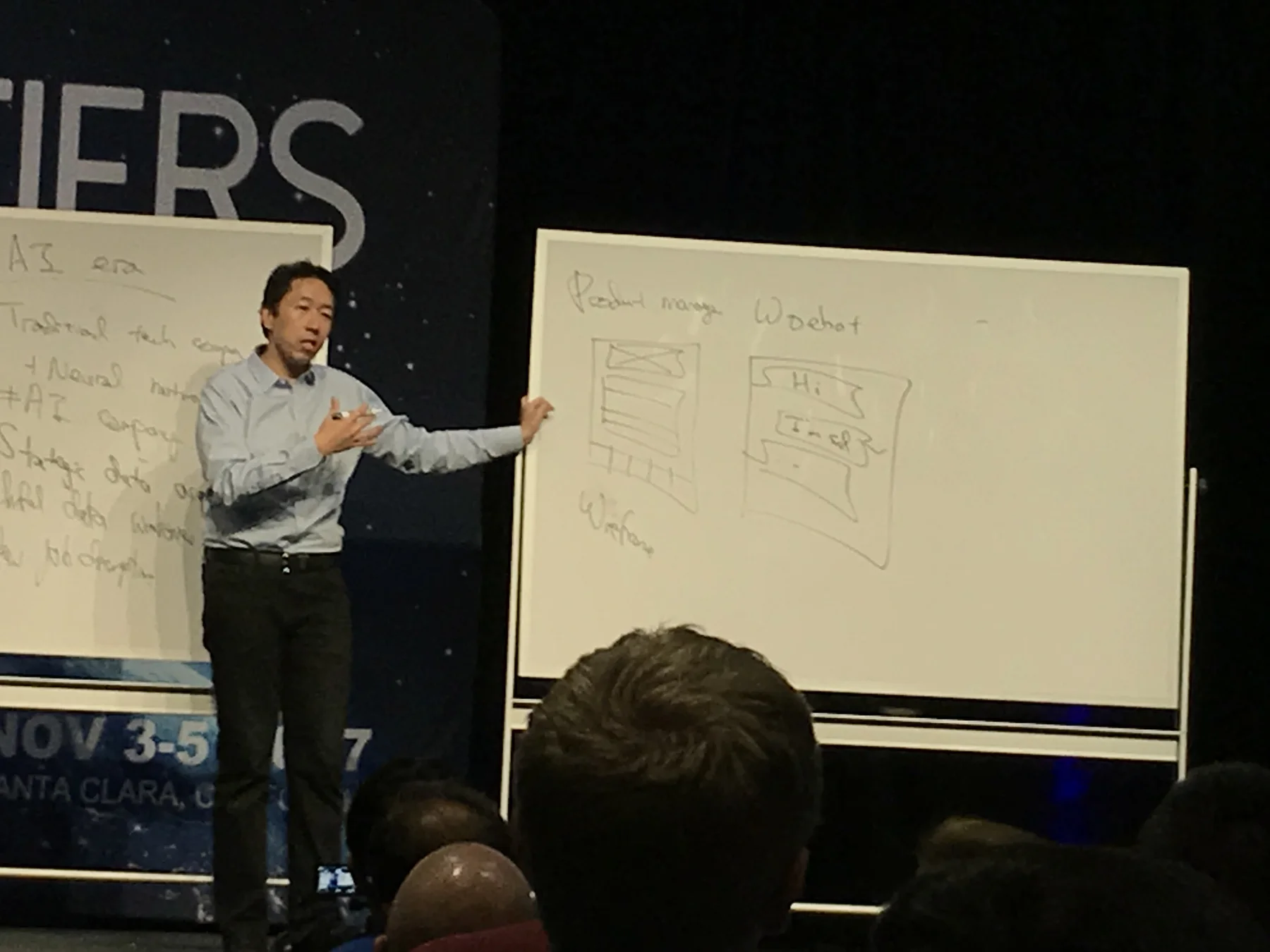
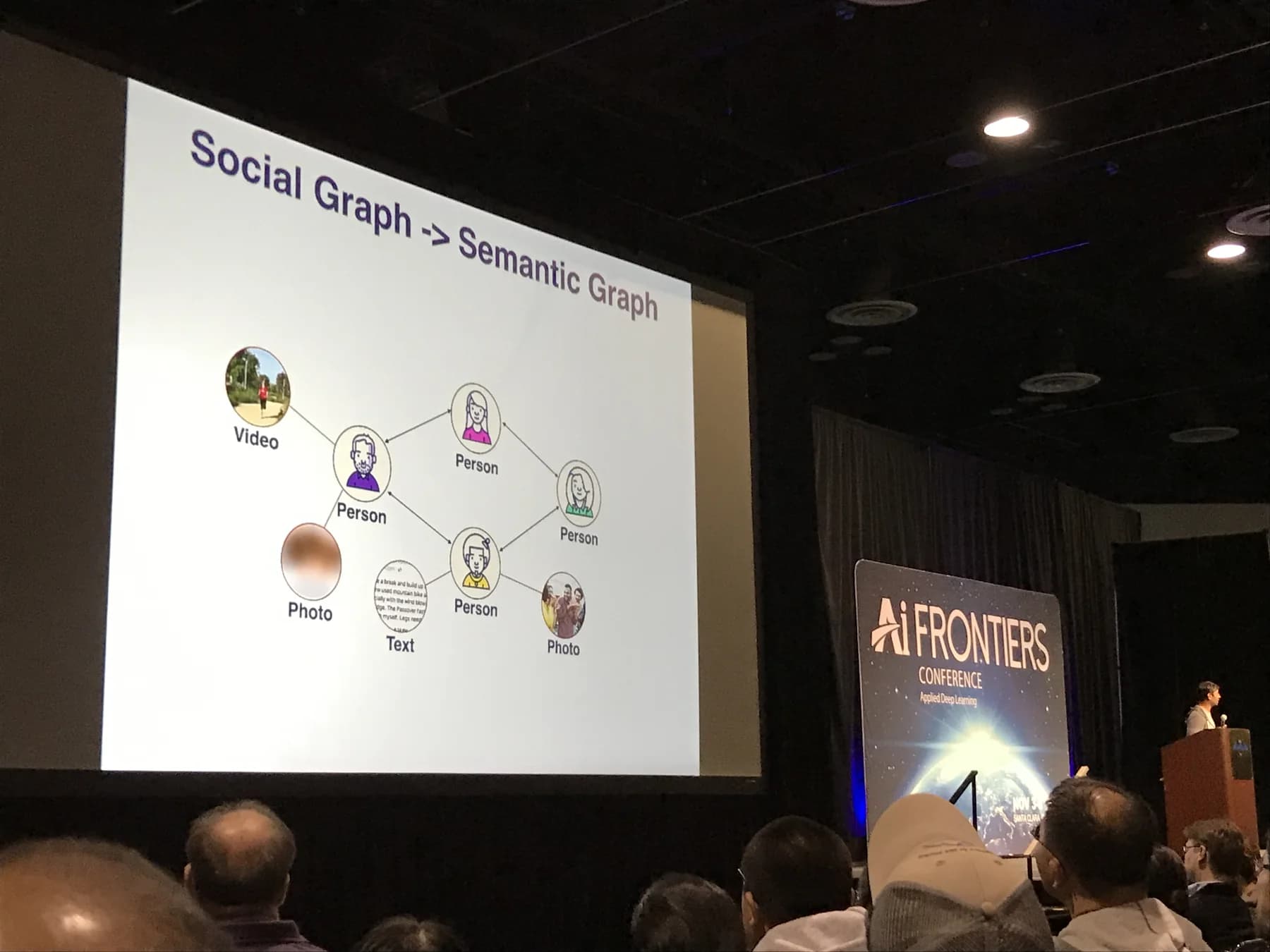
The photos that still matter most are the ones where a model is being translated into a user-facing object: a whiteboard sketch of product and chatbot flows, or a slide turning social data into a semantic graph. These were interface problems as much as model problems.
A model can classify, rank, transcribe, recommend, or retrieve. A product still has to decide what the person sees, what the system admits, what can be corrected, and how much uncertainty belongs on screen. That was visible in 2017, even before chat interfaces became the default public image of AI.
Embodied AI made the gap visible
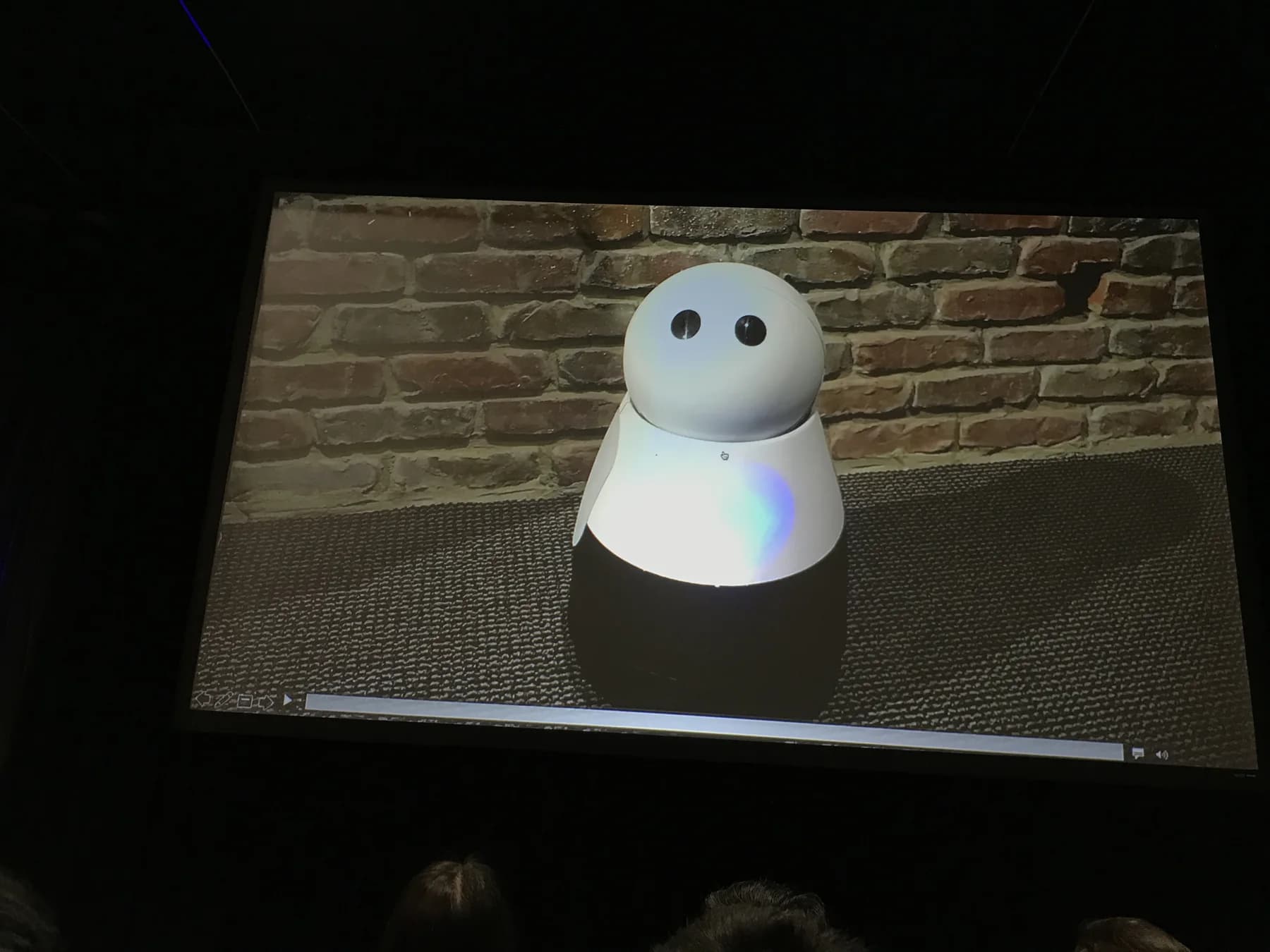
A small home-robot demo is a good reminder of how different AI feels when it leaves the screen. The promise is emotional and physical, but the product burden becomes heavier: movement, attention, voice, environment, safety, and user interpretation all arrive at once.
This is why applied AI cannot be judged only by model capability. The harder test is whether the surrounding experience helps people understand what the system can do, where it is limited, and how to recover when the interaction breaks.
What changed in hindsight
From 2026, the photos feel like a prelude. Many of the ingredients are familiar now: assistants, semantic retrieval, visual recognition, multimodal input, automation, and the claim that AI will reshape ordinary work. What changed is scale and access. These ideas moved from conference rooms into browsers, phones, design tools, support desks, and code editors.
The design lesson did not change as much. Useful AI still needs clear boundaries, visible reasoning, human correction, accessible fallbacks, and product teams who understand that intelligence is not the same thing as an experience. AI Frontiers 2017 is a good field note because the frontier was already pointing there.
Recommended reading
Read next
4 min read
Inside China's Beauty Innovation Stack
Field observations from CiE 2026 in Hangzhou on how Chinese beauty brands connect research, packaging, manufacturing, commerce, and consumer experience.
2 min read
When Distribution Beats Product: Audience Lessons From Elsa Figueira
A founder-led essay on audience empathy, channel fit, and why the right distribution model can outperform the more ambitious product build.
2 min read
The AI-Powered Web Experience Playbook for Modern Product Teams
A practical note on turning AI from a feature announcement into a web experience people can understand, trust, and actually use.