


Conversion and checkout · UX/UI pattern guide
Shopping cart and order summary
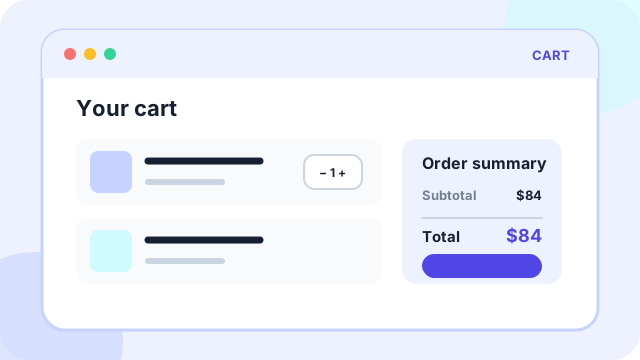
A shopping cart is a persistent collection of chosen items or configuration decisions that users can review and edit before committing.
At a glance
What the pattern is designed to accomplish
Persistent cart, quantity controls, subtotals, saved choices, and review step.
Planning price
€1,300
A starting budget anchor before discovery and technical scoping.
Typical effort
5-8 days
The implementation range depends on states, data, and integrations.
Pattern family
Conversion and checkout
Use the family to find adjacent patterns that support the same journey.
Use cases
When this pattern is a strong fit
Use the pattern when it removes a real decision or interaction burden, not simply because users recognize its visual form.
Best suited to
- Purchases containing multiple items, quantities, or options
- Service builders and configurators where scope accumulates over time
- Flows where users need a review checkpoint before submission
Anatomy
The essential parts of shopping cart and order summary
The visual treatment can change, but these responsibilities need to remain clear.
Part 1
Persistent items with names, variants, quantities, and prices
Define this part explicitly in the design and test it with realistic content and states.
Part 2
Immediate editing, removal, saving, and recovery controls
Define this part explicitly in the design and test it with realistic content and states.
Part 3
Transparent subtotal, fees, discounts, and next-step expectations
Define this part explicitly in the design and test it with realistic content and states.
Part 4
A clear path to checkout plus a path back to browsing
Define this part explicitly in the design and test it with realistic content and states.
Implementation
Design and delivery guidance
The pattern works when interaction rules, content, data, and edge cases support the same user goal.
Recommended approach
- Persist the cart across sessions when practical and explain expiration.
- Recalculate totals immediately after edits.
- Keep unavailable or changed items visible with a clear recovery choice.
Common failure modes
- Revealing mandatory fees only after checkout begins
- Removing items silently when inventory or authentication changes
- Using a cart when a direct single-action commitment would be clearer
Accessibility
Inclusive design requirements
Accessibility is part of the pattern's behavior and content model, not a visual pass added after implementation.
Minimum considerations
- Announce quantity, removal, and total changes.
- Use labeled controls rather than making tiny icons the only edit mechanism.
- Keep error messages next to the affected item and include a recovery action.
History
How shopping cart and order summary emerged and who popularized it
Interface patterns usually evolve through several technologies and products. The distinction below avoids assigning a single inventor where the evidence points to gradual adoption.
Origins
How the pattern came about
The digital cart borrowed its metaphor from physical self-service shopping carts and mail-order forms. Early online stores needed a temporary server-side collection before browser cookies and persistent accounts became dependable.
Popular adoption
Who helped make it mainstream
Major 1990s ecommerce sites, especially Amazon, made the cart icon and review page universal web conventions. Mature cart and checkout research from organizations such as Baymard later standardized expectations around persistence, editing, and transparent totals.
History and practice sources
Related patterns
Continue through the pattern library
Adjacent patterns often need to be designed as one journey rather than as isolated components.
Conversion and checkout
Progressive checkout
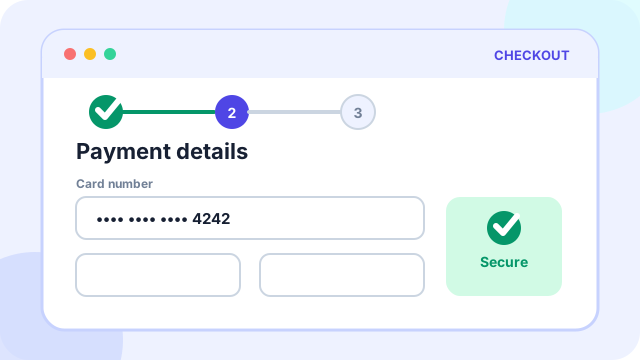
Step-by-step checkout, validation, delivery/payment sections, and trust markers.
Read the pattern guideConversion and checkout
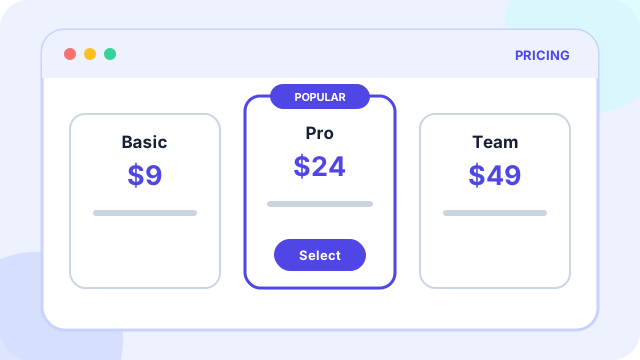
Pricing/package selector
Conversion and checkout
Product detail object page
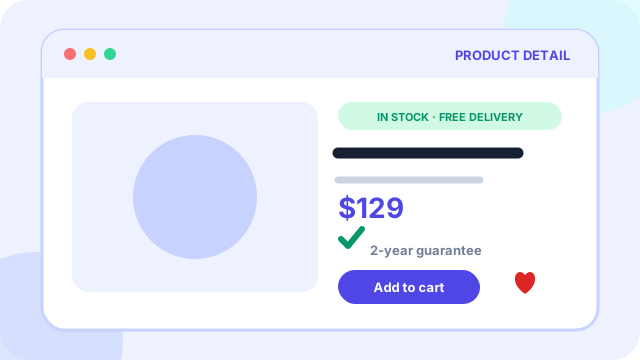
Image gallery, benefits, specifications, trust cues, add-to-cart, and ask-AI decision support.
Read the pattern guide