900+
survey responses
A Taiwan-wide study of students aged 18 to 29.


Taiwan · 2023 to 2025 · MA interaction design research
Every purchase already moves money toward a kind of future. Green Filter explored how an AI companion could make that consequence visible at the moment a young adult chooses what to buy, then connect the same decision to saving, investing, health, climate, and company accountability.
900+
survey responses
A Taiwan-wide study of students aged 18 to 29.
876
final survey sample
Eligible completed responses used in the published results.
48+
universities represented
Twenty-one campuses were visited in person during recruitment.
32
moderated tests
Face-to-face prototype sessions across seven universities.
100+
self-tests
Anonymous prototype trials at more than twenty universities.
7
expert interviews
Sustainability, finance, policy, technology, and behavior perspectives.
The product problem
The research found a wide gap between environmental concern and purchase behavior. Students believed their spending affected the environment, yet the evidence needed to act was scattered across labels, company reports, news, product pages, and unfamiliar financial language. Price, convenience, health, trust, and product quality still had to be resolved in seconds.
The existing experience
Commerce interfaces are excellent at showing price, images, reviews, color, payment plans, and urgency. They rarely explain where a product came from, who made it, what materials it contains, what risks or externalities sit behind it, or what kind of company receives the money.
The Green Filter proposition
Green Filter combines environmental, health, labor, product, company, and financial signals, translates them into plain language, and gives the user a practical next move: understand, compare, avoid, choose an alternative, or ask a deeper question.
Research system
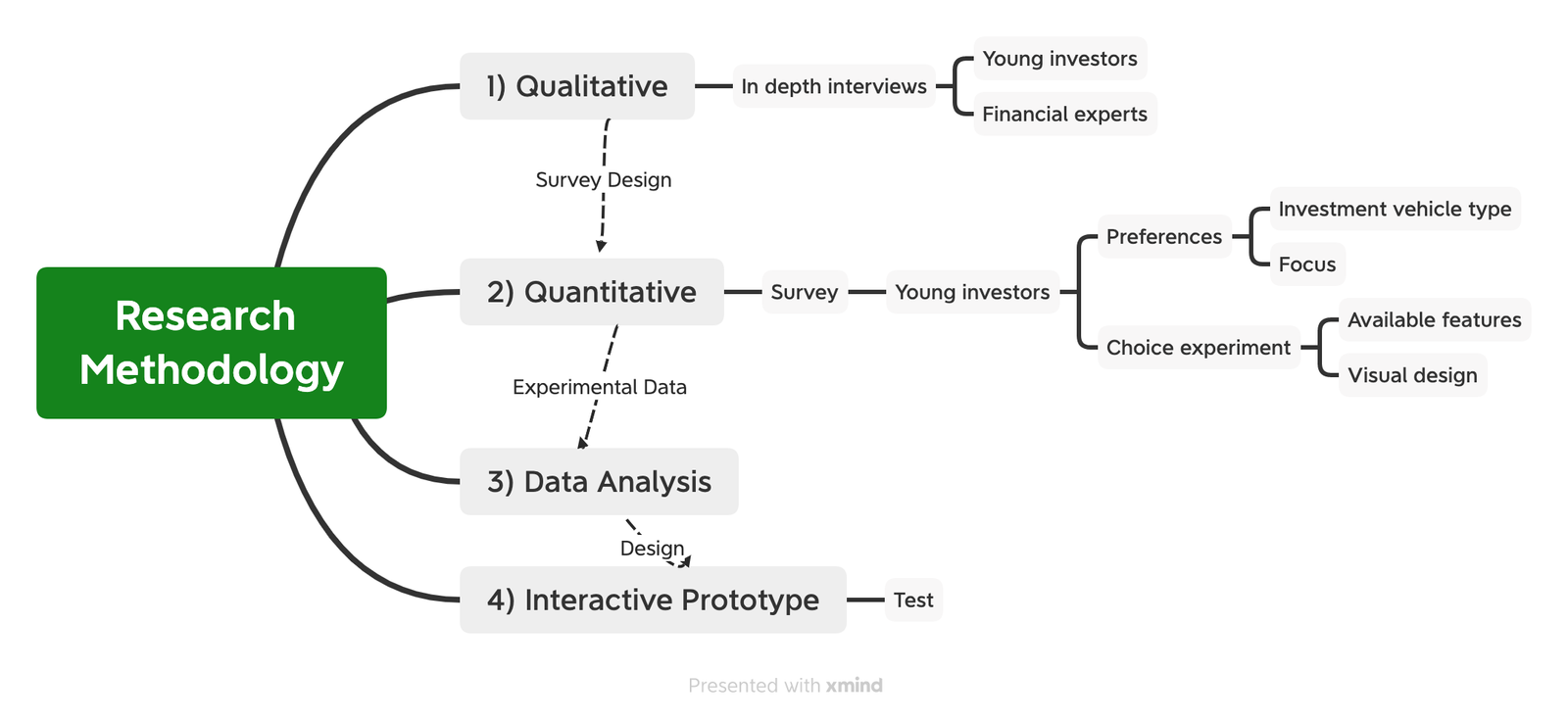
Green Filter was developed as a mixed-method research program at National Cheng Kung University. The work moved from systems literature and expert perspectives, through a large behavioral survey, into prototypes tested inside real online shopping journeys.
01
Frame the system
The research began with literature on planetary health, sustainable consumption, financial behavior, AI, and the Theory of Planned Behavior. Expert interviews helped identify where product data, incentives, regulation, and daily habits collide.
Literature review + 7 expert interviews
02
Map the people
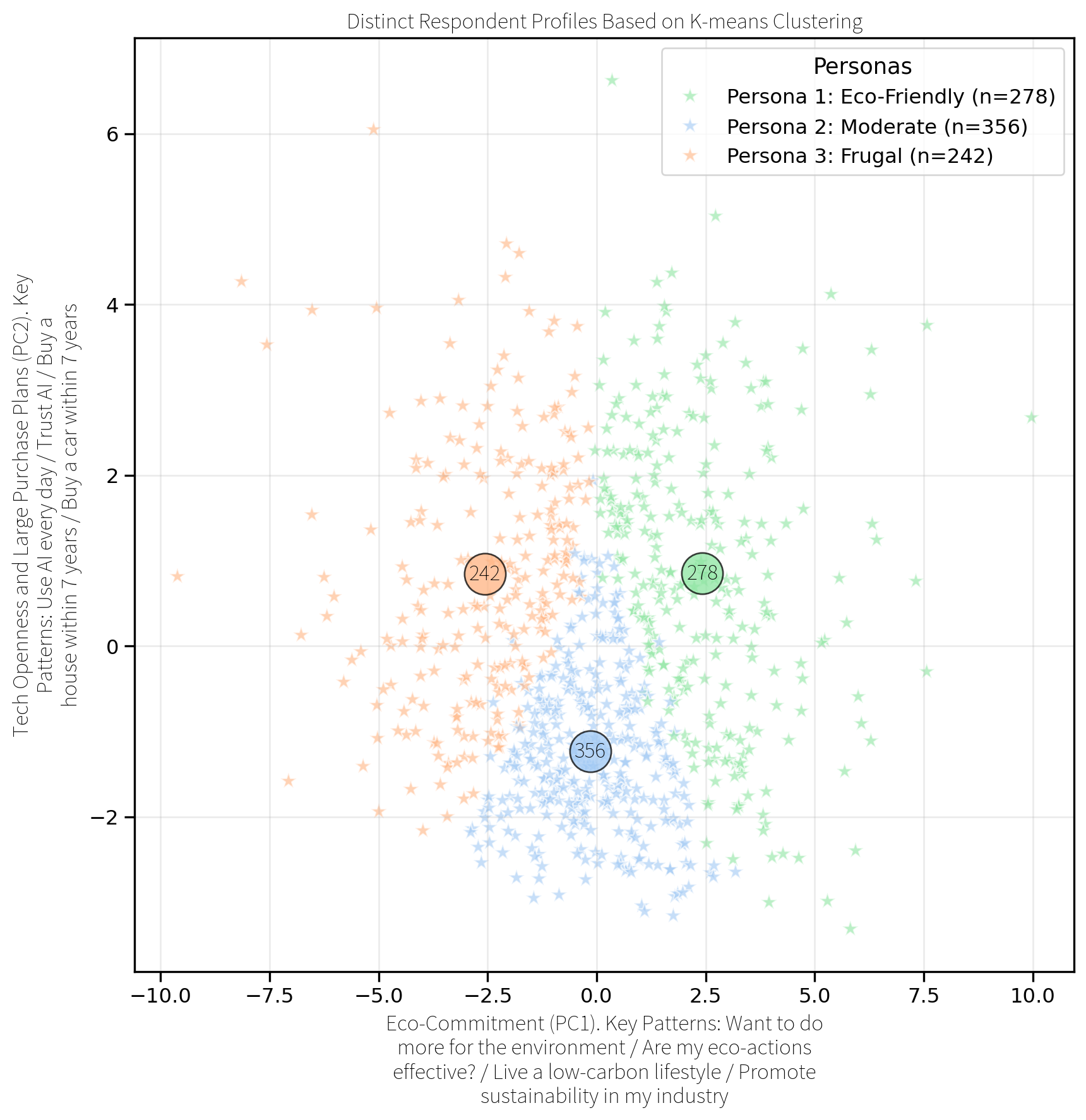
A 63-question survey was distributed across Taiwan. It covered shopping, saving, investing, environmental concern, trust, AI, future plans, and feature preferences. The work moved beyond average answers by clustering 36 attitude fields into three behavioral personas.
1,644 starts + 986 completions + 876 eligible responses
03
Test in context
The Green Filter Chrome extension was tested on Momo product pages, where students were already looking at price, images, reviews, specifications, and discounts. A linked conversational prototype let them ask deeper questions about products and companies.
32 interviews + 100+ anonymous self-tests
Understand the product, company, materials, origin, and alternatives.
See how repeated choices shape money, resources, risk, and personal impact.
Recognize spending as support for the companies and systems behind the product.
The product thesis
Shopping can become the first lesson in investing.
Green Filter calls this “Shopping-as-Investing.” The phrase reframes a purchase as more than consumption. Money becomes a vote of confidence in a company, a production system, a supply chain, and a future cost structure. The product begins with a familiar object, then widens the user’s view from price today to value and consequences over time.
Behavioral segmentation
K-means clustering across 36 attitude questions produced three broad personas. The clusters did not divide people into good and bad consumers. They exposed different trade-offs, motivations, and levels of perceived control that the interface must respect.
Values-led
n=278More willing to act or pay for environmental goals, but still needs credible evidence and usable alternatives.
Product implication: Offer depth, provenance, and the ability to compare impact without hiding practical product quality.
Undecided
n=356Balances competing concerns and may care about sustainability without making it the dominant purchase criterion.
Product implication: Make the better choice easy to understand, easy to compare, and compatible with price and convenience.
Cost-first
n=242Protects affordability and is cautious about paying a green premium, even when environmental concern exists.
Product implication: Lead with total value, durability, safety, savings, and lower-impact alternatives at a realistic price.
What students asked for
The strongest preferences were concrete and product-level. Students wanted to avoid harmful products, understand origin and production, and receive feedback about their own behavior. Social feeds, generic news, and abstract carbon tracking ranked lower.
63%
The strongest requested feature was a product-level filter that makes harmful options easier to identify and avoid.
41%
Origin mattered because it connects transport, local production, accountability, and perceived trust.
40%
Students wanted production information translated into a simple signal, rather than another report to decode.
25%
A personal summary could turn isolated purchases into feedback about longer-term spending behavior.
One project, four surfaces
Each surface answered a different question. The public archive made the evidence inspectable. Ziran supported recruitment and local communication. The extension reached the shopping moment. The AI prototype allowed deeper exploration after the first signal.
01
Public research archive
The complete thesis became a navigable public website rather than a PDF hidden in a university repository. Methods, charts, quotes, testing notes, limitations, and conclusions remain open for inspection.
Explore the research02
Survey and recruitment environment
A Traditional Chinese entry point explained the research, collected anonymous student responses, and supported field recruitment across Taiwanese universities.
Visit Ziran Taiwan03
In-context intervention
The extension inserted product analysis into Momo, close to a real purchase decision. It surfaced sustainability signals, company context, and alternative products without requiring the user to start from a separate research tool.
View the extension04
Conversational exploration
The web prototype allowed deeper questions after the first signal: ingredients, materials, carbon, labor, company behavior, alternatives, and the relationship between spending and investing.
Open the AI prototype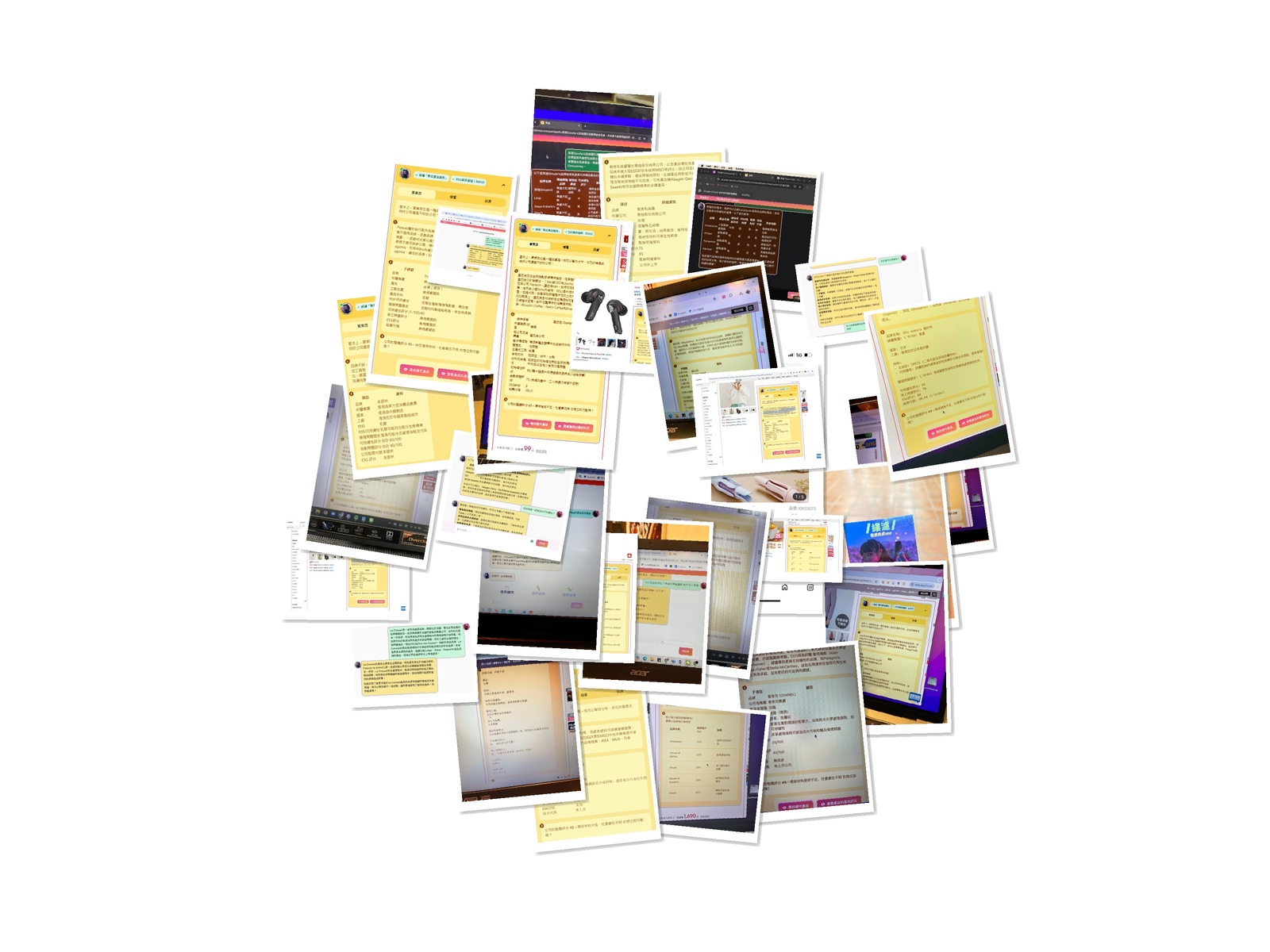
Interaction design decisions
The design challenge was not to generate more information. It was to fit trustworthy evidence into an attention environment already dominated by price, images, reviews, specifications, and promotional pressure.
01
Entry point
The research showed that students rarely begin shopping by searching for an ESG report. They begin with a product, a price, a picture, a need, or a discount. Green Filter therefore entered the existing commerce flow and treated sustainability as decision support, rather than a separate educational destination.
02
Information hierarchy
Raw carbon numbers, ESG categories, certifications, materials, factory claims, and controversies create cognitive overload. The interface needs a clear top layer, a short explanation of why, and visible sources underneath. Trust comes from being able to move between summary and evidence.
03
Actionability
Participants responded most strongly when the prototype suggested a comparable product or brand. The alternative still had to satisfy price, quality, size, safety, and availability. The design shifted from moral judgment toward practical agency.
04
AI role
The useful role for AI was to combine fragmented product, company, and environmental information, then explain it in language a student could use. Testing showed that few people wanted to begin with an open chat box. The interface should answer the obvious question first and make conversation an optional path for curiosity or uncertainty.
05
Motivation
Food safety and personal risk were more immediate than abstract environmental language. That does not weaken the ecological purpose. It reveals how people understand consequences. Product health, worker treatment, origin, durability, and pollution can be presented as one connected quality story.
06
Resilience
Slow Wi-Fi, older laptops, browser restrictions, and dying batteries became research findings. A sustainability tool that requires unusually good infrastructure excludes the people it claims to help. The next product direction is lighter, mobile-first, and more tightly integrated with familiar shopping and payment tools.
What testing changed
The sessions exposed gaps between the intended product and the experienced product. Some problems were conceptual, such as ESG jargon. Others were brutally ordinary: placement, loading time, unfamiliar navigation, platform restrictions, and an overlay that looked like an ad.
Price, photos, reviews, and specifications took attention first.
Sustainability cannot expect a separate attention budget. It must work with the hierarchy of commerce.
Move the signal beside the price and connect greener choices to cost, quality, and availability.
The extension was sometimes missed or mistaken for an advertisement.
An intervention can technically exist on the page while remaining behaviorally invisible.
Clarify ownership, use a recognizable entry cue, and make the first benefit visible without an extra click.
ESG labels were recognized but poorly understood.
Institutional language can signal importance while failing to support a decision.
Replace jargon with a plain statement, a visual level, and a short explanation of the evidence.
Concrete alternatives were the most actionable feature.
People can act when the product preserves choice instead of ending with a warning.
Keep one-click alternatives persistent and compare the practical attributes that already matter.
Carbon, labor, ingredients, and disposal information created surprise.
Hidden product histories can change how familiar objects are understood.
Reveal one material fact at a time, then allow the user to inspect the full lifecycle and sources.
Outcome and limits
Green Filter produced a working extension, an AI prototype, a large survey dataset, behavioral personas, documented usability findings, and a public research archive. It does not claim that one prototype solved sustainable consumption. It clarifies where a useful product can intervene and what must be solved next.
What the project established
Students already understood that money has environmental consequences. The missing layer was practical control: trustworthy signals, comparisons, alternatives, and an interface that arrives before the purchase is complete. The project reframed sustainability from a moral lecture into product intelligence that can support agency.
What remains open
A production system still needs reliable product passports, source provenance, data freshness, uncertainty handling, platform partnerships, mobile integration, and governance against greenwashing. These are product and institutional problems, not details an interface can hide.
HAAM role
Green Filter was Kris Haamer’s MA Interaction Design thesis at National Cheng Kung University in Tainan. The role covered research framing, literature review, expert interviews, survey design, on-campus recruitment, quantitative and qualitative analysis, clustering and personas, product strategy, interaction design, extension and prototype development, moderated testing, iteration, data visualization, and publication of the research archive.
Primary project sources
Need a complex product made understandable?
How we learned
The research combined a large survey, expert interviews, moderated prototype tests, and repeated self-testing. It covered shopping, sustainability, finance, and AI together so the interface could follow real decision behaviour instead of an idealised ethical-consumer journey.
Evidence trail
Good interaction design should be traceable upstream. Depending on the project, that upstream work might be interviews, co-design, fieldwork, archive work, testing, analytics, or operations. Here is the shortest version of the chain from evidence to decision.
01
876 eligible survey responses, seven expert interviews, 32 moderated tests, and 100+ self-tests captured shopping, sustainability, finance, and AI behaviour.
02
Commerce information wins attention first, ESG language is poorly understood, alternatives are more actionable than warnings, and open chat is not the best first step.
03
Put a plain-language signal beside the purchase decision, keep evidence inspectable, show alternatives, and make AI conversation optional.
04
The product direction can be traced from observed behaviour to interface hierarchy instead of relying on assumed preferences.
Optional analytics. Google Analytics and Clarity load only if allowed; form, email, and chat content are excluded.